Practice scales
When starting to learn scales the first thing we need to know is the fingering. What is fingering you ask? Basically it's an efficient system that lets you know which finger goes on what key so that the motion of the hand is as smooth as possible and without stumbling on your own fingers. This fingering is made easy to understand with the help of numbers from 1 to 5, 1 being the thumb (on both right and left hand) and 5 being the pinky finger as shown bellow:
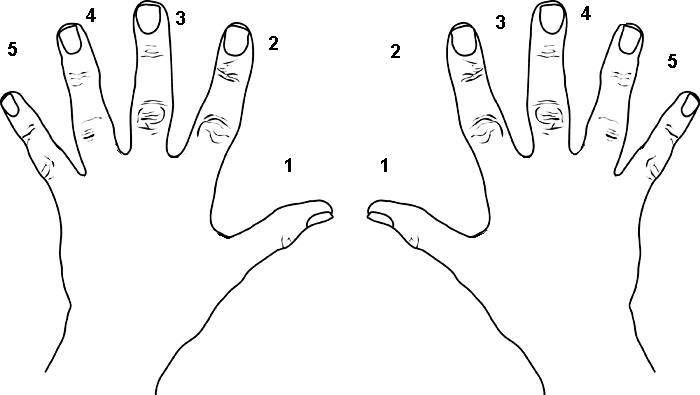
Keep in mind that these fingerings are the general accepted standard, some of them might not be so efficient in a specific context. Keep your mind open and explore other possibilities if you need to.
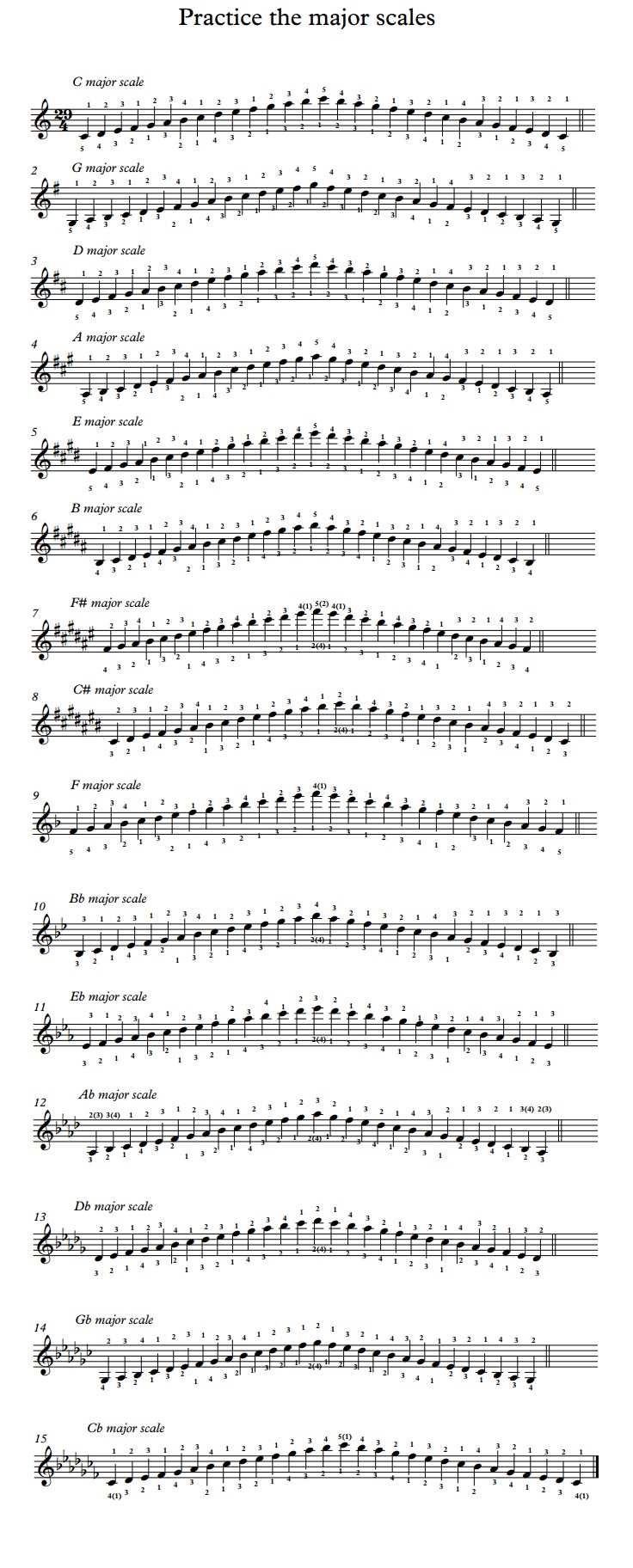
Major scales
In the bellow example you will see two rows of numbers that represent fingerings. The upper row represents the fingering for the right hand and the bottom row represents the fingering for the left hand. When practicing scales with both hands keep an interval of an octave between the left and right hand and although the bellow exercise has only a 2 octave span you can expand it to 3 and even 4 octaves. The numbers in the parenthesis are just to let you know of the continuity of the pattern and, can serve as a 2nd version of fingering that is a bit harder but good for improving your technique.
Minor Scales
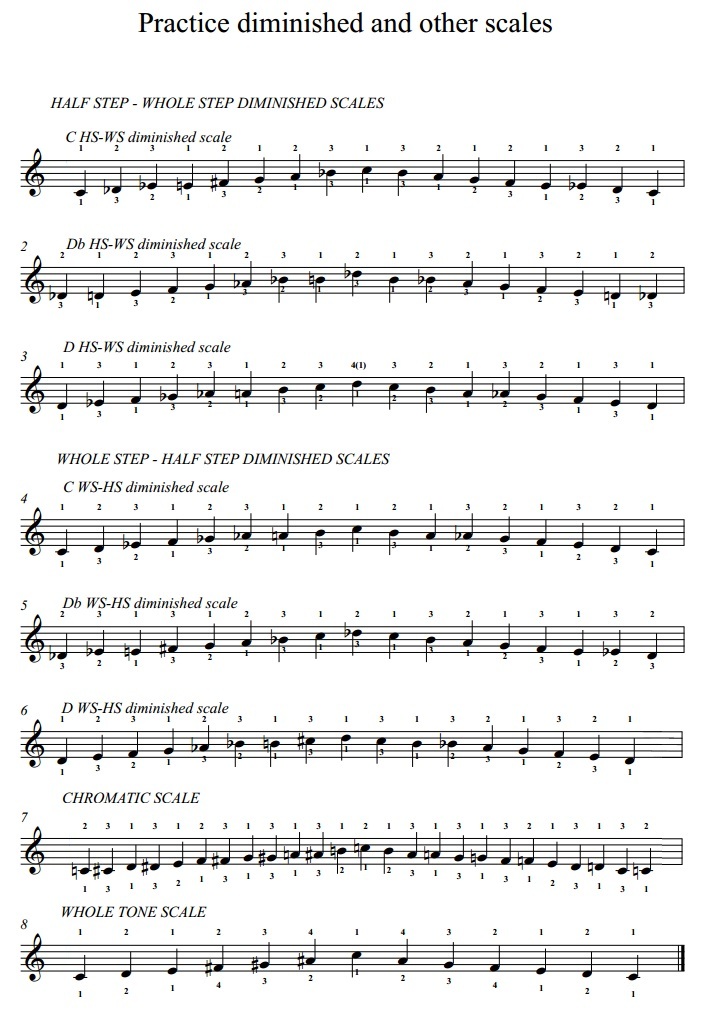
Diminished scales and other scales
In the bellow example you will see two rows of numbers that represent fingerings. The upper row represents the fingering for the right hand and the bottom row represents the fingering for the left hand. When practicing scales with both hands keep an interval of an octave between the left and right hand and although the bellow exercise has only a 2 octave span you can expand it to 3 and even 4 octaves. The numbers in the parenthesis are just to let you know of the continuity of the pattern and, can serve as a 2nd version of fingering that is a bit harder but good for improving your technique.